

Region Coding and Software Updates for Imported Electric Cars in the UAE
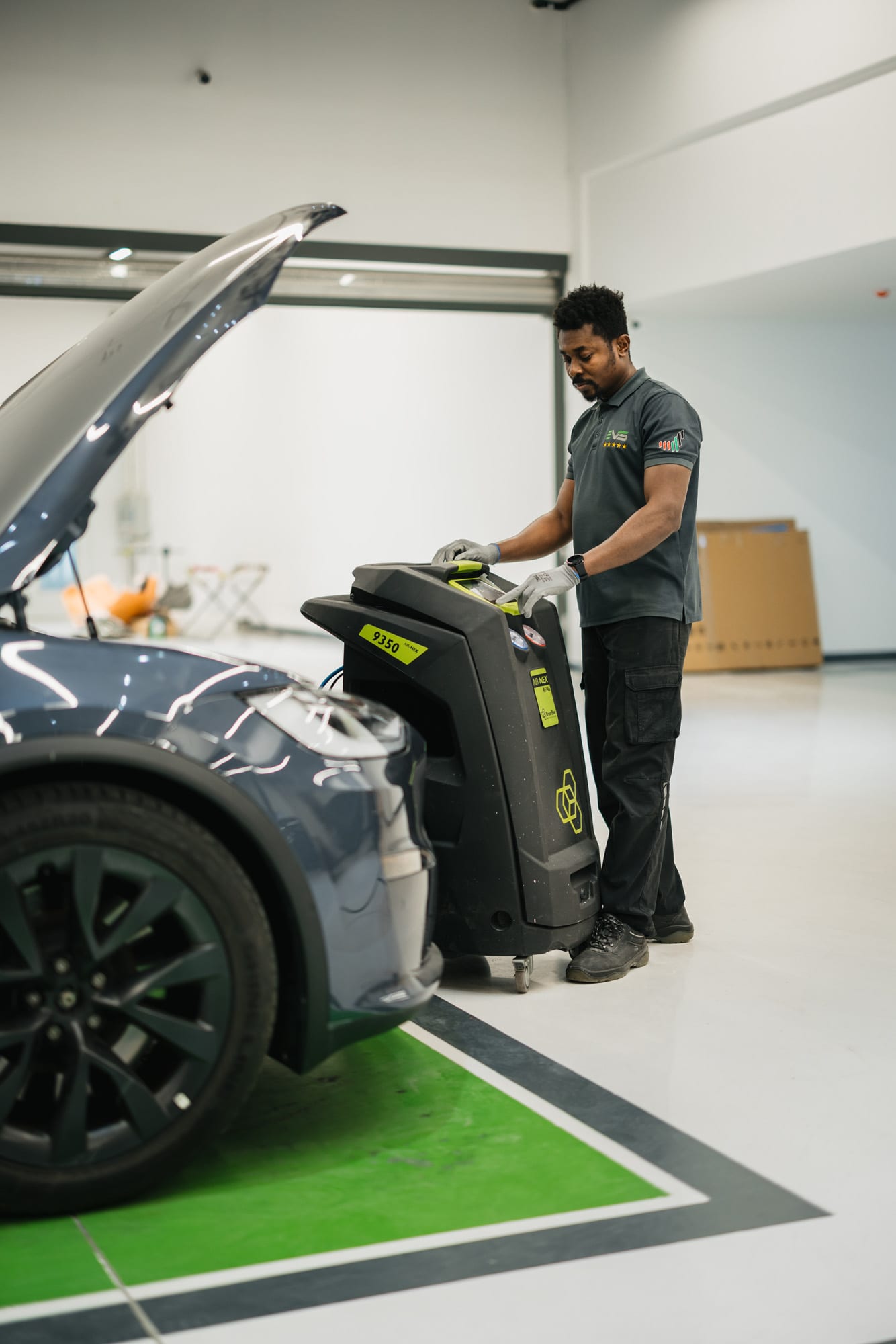
Region Coding and Software Updates for Imported Electric Cars in the UAE
If you own an imported EV, understanding EV region coding UAE is one of the most important steps in keeping the car practical, connected, and easy to live with. An imported electric vehicle can be technically excellent and still feel awkward day to day if the language, units, navigation, radio, or software settings were configured for a different market.
That is especially true in the UAE, where owners often bring in vehicles from Europe, North America, or Asia and then discover that some features do not behave exactly as expected. In many cases, the issue is not a mechanical fault at all. It is a regional software and configuration mismatch.
At EVS, we work with imported electric and hybrid vehicles every day, and we regularly see how much difference correct software setup can make. From custom region coding to module programming and OEM-level firmware updates on supported vehicles, the goal is simple: make the car operate as properly as possible for its actual market and use.
What region coding actually means for an imported EV
Region coding is the process of configuring a vehicle’s software and electronic settings so they match the country or market where the car is being used. In practice, that can affect a wide range of features, from language menus to navigation behaviour and unit display.
For imported EVs, region coding can influence how the car presents information and which functions are available. It may not change the physical hardware, but it can change how the car “thinks” about its region.
Common areas that may be affected include:
- Language and menu display
- Units of measurement, such as kilometres, range, or temperature
- Navigation maps and destination formatting
- Radio frequencies and band settings
- Driver-assistance prompts and warning logic
- Feature availability that depends on region approval
- Connectivity and app compatibility
The exact possibilities depend on the make, model, trim level, and software architecture. That is why a proper assessment matters before any coding is done.
Why imported electric cars often show the wrong settings
Imported EVs are usually built for a specific destination market. When they arrive in the UAE, they may still be carrying the original region configuration from where they were sold.
That can create a long list of small but frustrating issues. The car may display the wrong language, use unfamiliar formats, or show functions that do not fully match local expectations. In some cases, features tied to the original market may not operate correctly outside that region.
A few common examples include:
- A navigation system that does not include UAE-friendly map content
- A display that uses miles instead of kilometres
- A radio system that is tuned for a different frequency standard
- Voice prompts that remain in the original language
- Region-restricted features that are not fully enabled
- Infotainment settings that behave differently after a software update
This is particularly relevant in the UAE because owners expect the car to work smoothly in Arabic or English, with metric units and locally relevant navigation support. If the vehicle was imported from another market, those settings may need specialist attention.
What can usually be changed through custom region coding
Custom region coding is not about “tuning” the car in a risky or experimental way. It is about aligning supported settings with the vehicle’s intended use in the current market.
Depending on the model, region coding may help with the following:
Language configuration
Some vehicles allow the menu language, voice prompts, and system text to be changed. Others may only support certain languages depending on the original market software.
Units and display preferences
Imported vehicles often arrive with miles, Fahrenheit, or other destination-market defaults. Coding may allow supported vehicles to switch to kilometres, Celsius, and other region-appropriate settings.
Navigation and mapping
Some cars require map data or region configuration to make navigation function properly in the UAE. In some cases, the system may need map-related support or a compatible software package.
Radio and media settings
Radio band spacing and tuner settings can vary by market. Where supported, region coding may help align the car with local broadcast standards.
Connected features and app integration
Some app and connectivity features depend on the region and software version. If the vehicle supports it, proper configuration may improve how the in-car system interacts with compatible platforms.
Driver-information and warning presentation
Even when the car is fully functional, a poorly matched region setup can make the interface feel confusing or inconsistent. Correct coding can improve usability and clarity.
It is important to note that not every vehicle can be adjusted in every way. Some features are hard-locked by the manufacturer, region policy, or hardware generation. The model determines what is possible.
Why software updates matter just as much as region coding
Region coding and software updates are related, but they are not the same thing.
Region coding changes configuration. Software updates change the operating software itself. On supported vehicles, OEM-level firmware and software updates can improve system stability, address known faults, and introduce supported features where available.
For imported EVs, this matters because the vehicle may be running software from an older market build or a version that was never intended for UAE use. In some cases, software compatibility affects the way the car handles charging, infotainment, sensors, battery management, or digital services.
A supported update can help with:
- Fixing known software faults
- Improving stability
- Restoring proper communication between systems
- Supporting compatible region features
- Updating modules after repair or replacement
That said, a software update should always be handled carefully. Not every update is suitable for every vehicle, and not every module should be flashed casually. Specialist diagnosis comes first.
Official firmware updates vs unsafe unofficial tweaks
This is one of the most important distinctions for imported EV owners to understand.
An official or OEM-level firmware update is a controlled software process carried out on supported vehicles using appropriate tools, correct procedures, and compatible files. The aim is to update the car safely while preserving system integrity.
By contrast, unofficial tweaks can be risky. They may be offered online or through informal channels with promises of unlocking hidden features, bypassing restrictions, or “activating” functions that were never meant to be enabled in that vehicle.
The problem is that unsafe modifications can create real issues, including:
- Corrupted module data
- System instability
- Feature loss after reboot or update
- Fault codes and warning lights
- Communication errors between modules
- Security or warranty concerns
- Incorrect behaviour in safety-related systems
Not every tweak is harmful, but the risk rises sharply when the work is done without proper diagnostics or without understanding the vehicle’s software architecture. If a modification cannot be clearly explained, verified, and reversed where necessary, it deserves caution.
A professional approach is not about chasing every possible hidden function. It is about making the car work properly, safely, and consistently.
How EVS handles custom region coding and module programming
At EVS UAE, our approach is built around specialist EV knowledge and proper technical assessment. We do not treat imported EVs like standard petrol cars with a few extra screens attached. These vehicles rely on tightly connected software systems, and the wrong change in one module can affect another.
That is why we combine custom region coding, module programming, and OEM-level firmware updates when the vehicle supports those procedures.
Custom region coding
Where the vehicle and its software architecture allow it, we can help configure supported region settings to better suit local use. That may involve language, units, display behaviour, or compatible feature alignment.
Module programming
If a module has been replaced, reinstalled, or reconfigured, it may need to be programmed correctly so it communicates with the rest of the vehicle. This matters for imported cars because a new or mismatched module may not work properly until it is integrated into the vehicle network.
OEM-level firmware updates
For supported vehicles, firmware and software updates can improve stability and help resolve software-related issues. These updates are handled with a diagnostic-first mindset, because the wrong update on the wrong vehicle can create more problems than it solves.
This is where specialist capability matters. EVS brings advanced diagnostics and dedicated electric-vehicle expertise together under one roof, helping owners understand what can be changed, what should not be changed, and what the vehicle actually needs.
What determines whether a feature can be changed
One of the most common misconceptions is that every imported EV can be coded into the exact specification of a local-market car. In reality, that is not always possible.
Whether a feature can be changed depends on several factors:
- The make and model of the car
- Model year and software generation
- Original market specification
- Module compatibility
- Manufacturer access and permissions
- Hardware already fitted to the vehicle
- Regional legal or technical limitations
For example, a car may support language changes but not map conversion. Another may allow region-specific display settings but not unlock every infotainment feature. Some modules may need programming before any change is accepted. Others may be locked in a way that makes a specific function unavailable.
That is why responsible EV region coding UAE work starts with diagnosis, not assumptions.
Why imported EV owners should avoid guesswork and DIY coding tools
It is easy to assume that software coding is just a matter of pressing a few buttons. In practice, it is far more technical.
Generic tools, copied settings, and online forum advice can be useful for learning, but they are not a substitute for model-specific knowledge. Imported EVs often have differences in software generations, module identifiers, and region logic that are not visible from the outside.
DIY coding attempts can lead to:
- Lost settings
- Faults that appear after restart
- Disabled features
- Mismatched software versions
- Difficulty restoring original configuration
Even if the issue seems minor at first, a small coding error can affect broader vehicle communication. That is especially true in electric vehicles, where safety systems, battery logic, infotainment, charging, and driver assistance may be interconnected.
Specialist diagnosis reduces that risk. It also helps owners avoid spending money on changes the vehicle cannot support.
The value of diagnosing the vehicle before changing anything
A professional coding job begins with understanding the car’s current condition. The goal is not to force a change. The goal is to find the right solution for that exact vehicle.
At EVS, our process is based on what the vehicle can support. That may involve checking software versions, module status, configuration compatibility, and the nature of any warnings or faults present.
A proper assessment helps answer questions such as:
- Is the issue actually region-related?
- Does the vehicle need coding, programming, or a software update?
- Has a module been replaced and not adapted correctly?
- Is the infotainment issue caused by region mismatch or hardware limits?
- Would an OEM-level update improve stability, or is another repair needed first?
That kind of structured diagnosis saves time and avoids unnecessary changes.
What imported EV owners in the UAE should expect from a specialist service
A good region coding and software service should be clear, careful, and transparent. The focus should be on what is technically possible, not on promises that sound impressive but cannot be backed up.
You should expect:
- Clear explanation of what can be changed
- Confirmation that features depend on the vehicle model
- Specialist handling of software and module work
- No overpromising on unsupported functions
- A proper diagnosis before coding or updating
- Advice on whether the issue is configuration, software, or hardware related
That approach is especially important in the UAE, where many imported cars are high-value vehicles and owners want reliable, premium support rather than experimentation.
Frequently asked questions about EV region coding UAE
What is EV region coding in the UAE?
EV region coding in the UAE is the process of adjusting an imported electric vehicle’s supported software settings so they better match local use. That can include language, units, navigation behaviour, radio settings, and other region-dependent features. The exact changes depend on the vehicle model and software.
Can region coding unlock every feature on an imported EV?
No. Region coding cannot unlock everything on every car. Some features are limited by hardware, software generation, manufacturer restrictions, or the original market specification. A specialist inspection is needed to confirm what is supported on that exact vehicle.
Is software coding the same as a firmware update?
No. Coding changes configuration settings, while a firmware update changes the software itself. Both can matter for imported EVs, but they serve different purposes. In many cases, the vehicle may need one, the other, or both.
Are unofficial coding tools safe for imported electric cars?
They can be risky. Unofficial tools may cause module corruption, warning lights, feature loss, or unstable vehicle behaviour. In electric vehicles, where systems are tightly connected, it is safer to use specialist diagnostics and controlled OEM-level procedures on supported vehicles.
What services does EVS offer for imported EV software issues?
EVS provides custom region coding, module programming, and OEM-level firmware updates on supported vehicles. Our work is guided by diagnostics and by what the vehicle can safely support, so the solution is tailored to the model rather than forced through a generic process.
Choose the right software support for your imported EV
If you drive an imported electric car in the UAE, the right software setup can make the vehicle feel far more natural, usable, and reliable. The key is to work with a specialist team that understands the difference between region coding, module programming, and firmware updates.
At EVS, we focus on performance, trust and total care. If your imported EV needs a configuration review, software support, or a specialist diagnosis to see what is possible, explore our service options and speak with the team.
Book Your EV Check through our service page here: https://evsuae.com/services/programming/custom-region-coding or contact us at https://evsuae.com/contact to get started with the right specialist support for your vehicle.