

Sun, Sand and Dents: Bodywork and Paint Protection in the UAE
Sun, Sand and Dents: Bodywork and Paint Protection in the UAE
If you own an EV, electric car paint protection UAE is not just about keeping the car looking polished. In the UAE, the exterior of a vehicle is constantly exposed to intense sun, airborne dust, sand, road grime, bird droppings, and the everyday reality of tight parking spaces and minor knocks. Over time, those conditions can dull paint, damage trim, leave stubborn marks, and turn small imperfections into bigger repair jobs.
For EV owners, the challenge is slightly more specific than it is for conventional cars. Electric vehicles still need the same care for paint, panels, glass, and cosmetic surfaces, but they also require a service team that understands high-voltage components, sensors, cameras, and the structure beneath the bodywork. That is where specialist care matters.
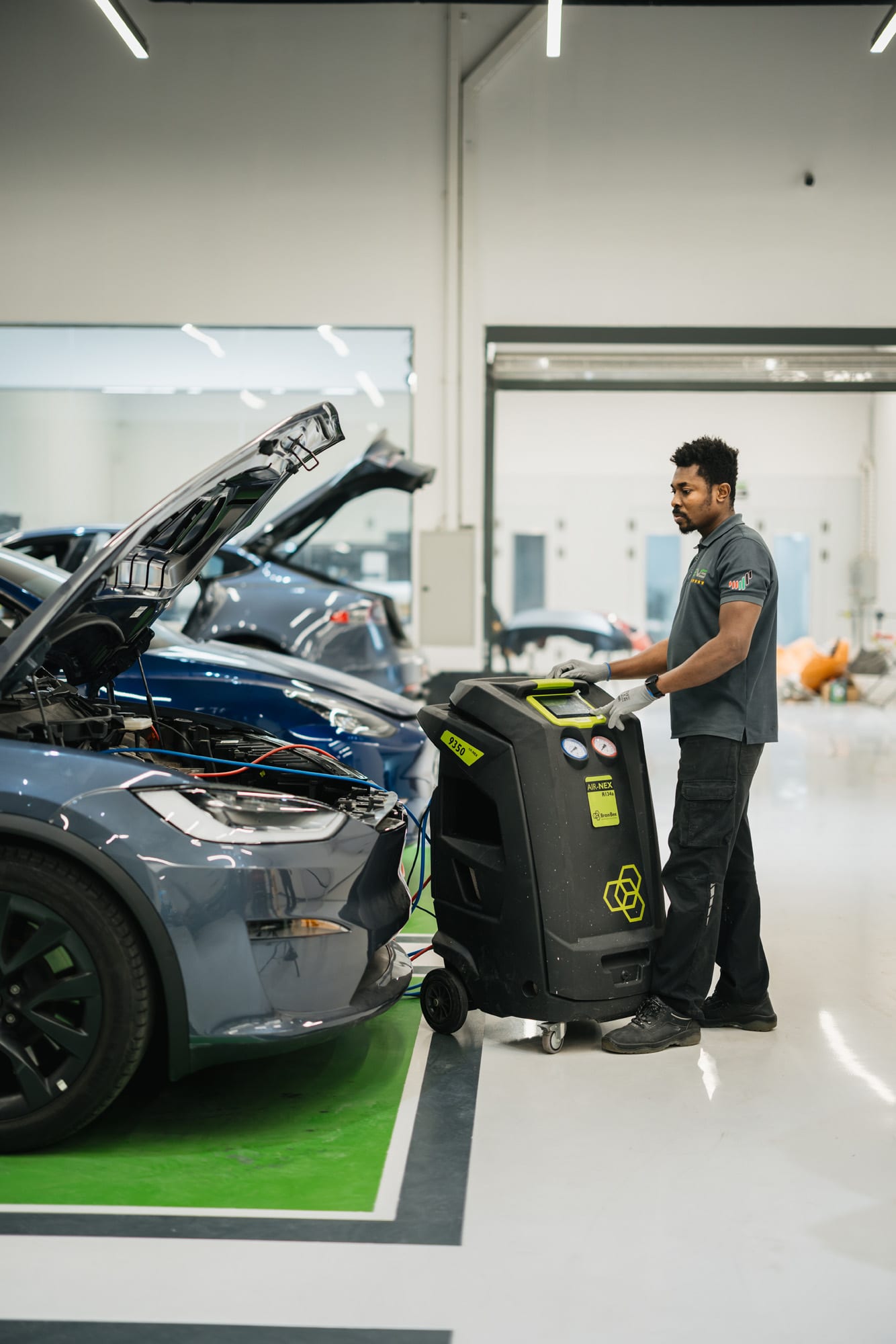
At EVS UAE, bodywork and finishing services are approached with EV-specific knowledge in mind. Whether you are dealing with a fresh scratch, a dent from a crowded car park, faded paint from harsh weather, or a vehicle that needs a more complete refresh, the right service can restore appearance while protecting the systems beneath the surface.
Why the UAE climate is tough on a vehicle's exterior
The UAE environment is beautiful, but it is demanding on cars. Strong sunlight can make paint look tired over time, particularly on darker colours and horizontal surfaces such as the bonnet, roof, and boot lid. Heat also stresses exterior materials, rubber seals, plastics, and coatings, especially when a car is parked outdoors for long periods.
Dust and sand create another layer of wear. They settle on the body, get trapped in panel gaps, and can scratch the paint if wiped away carelessly. Even a quick pass with a dry cloth can drag fine particles across the surface and leave light swirl marks.
Bird droppings, tree sap, and road contaminants can also create localised damage if left too long. These marks may look minor at first, but in a hot climate they can bond more quickly to the paint surface and become harder to remove cleanly.
Common exterior damage EV owners notice first
Most owners do not begin with major body damage. They usually notice small issues that build up over time. A light scratch from a shopping trolley. A door ding from a busy parking bay. A scuffed bumper corner from a curb. A stone chip on the front end after highway driving.
These are the kinds of issues that often get ignored because the car still drives perfectly. But cosmetic damage is not only about appearance. Once the clear coat or paint layer is breached, the panel becomes more vulnerable to further wear.
Some common exterior issues in the UAE include:
- Fine swirl marks from improper washing
- Sand abrasion on exposed panels
- Scratches around door handles and loading areas
- Parking dents and panel creases
- Paint fade or uneven gloss from UV exposure
- Bumper scuffs from low-speed contact
- Damage around mirrors, trim, and wheel arches
The good news is that many of these issues can be corrected or improved before they become more extensive.
Simple care habits that help preserve paint and finish
The best paint protection is often consistent care. You do not need complicated routines, but you do need habits that reduce abrasion and contamination. Washing the vehicle regularly helps remove dust and sand before they get worked into the finish.
A proper wash technique matters more than frequency alone. Use clean wash mitts, rinse thoroughly before wiping, and avoid dragging dry dust across the body. If the car is heavily dusty, a rushed wipe-down can do more harm than good.
It also helps to park thoughtfully when possible. Shade, covered parking, and avoiding narrow spaces can reduce exposure to heat, UV, and accidental door contact. In the UAE, these small choices can make a noticeable difference over time.
Other sensible habits include:
- Washing with the right towels and mitts, not rough cloths
- Removing bird droppings or contaminants promptly and carefully
- Avoiding automatic wash methods that may leave marks on softer finishes
- Checking bumpers, door edges, and lower panels regularly
- Inspecting paint after long highway trips or windy, dusty days
These practices do not eliminate wear, but they slow it down and protect the vehicle between professional visits.
When scratch and dent repair is the right answer
Not every blemish requires a full repaint. In many cases, scratch and dent repair is the most efficient way to restore the car’s appearance. This is especially true when the damage is isolated to one area and the paint surface around it remains in good condition.
A professional repair assessment can determine whether the mark is only in the clear coat, whether the panel needs reshaping, or whether the damage extends deeper. That difference matters because the correct repair method depends on the depth, size, and location of the issue.
Scratch and dent repair is often the right option when you have:
- Light to moderate scratches on a single panel
- Small dents from parking or door impact
- Scuffs on bumpers or corners
- Cosmetic damage that has not affected adjacent panels
- Damage that can be corrected without repainting the entire vehicle
The advantage of acting early is that small flaws are often simpler to address before they spread, rust is not typically the issue on EV bodies in the same way as older vehicles, but repeated exposure can still make the surface harder to restore cleanly.
When panel painting or full-body refinishing makes sense
Sometimes the damage is more visible than a spot repair can reasonably solve. A panel may have deep scratches, patchy colour, previous poor refinishing, or a level of wear that affects the whole section rather than one small area. In those cases, panel painting and refinishing can give a better result.
This service is also useful when a vehicle has been repaired before and the finish no longer blends properly. A good refinish should aim for a consistent appearance, good surface preparation, and a finish that looks integrated rather than patched.
A full-body painting and refinishing approach can be appropriate when the vehicle has:
- Widespread fading or dullness
- Multiple repaired areas that no longer match well
- Surface damage across several panels
- A desire to refresh the overall appearance after years of wear
- Previous repaint work that needs improvement
In a premium market like the UAE, finish quality matters. Colour matching, panel preparation, curing, and attention to edges and transitions all affect the final look. That is why this work should be handled by a bodywork team that understands more than just the paint itself.
Why EV bodywork needs specialist knowledge
Electric cars are not just cars with a battery instead of an engine. Their body structures often house sensors, cameras, charging hardware, high-voltage components, and safety systems that require careful handling. A technician who only sees the exterior panel may miss what sits behind it.
That matters when a car needs bodywork, panel replacement, bumper repair, windshield work, or sensor realignment. Some trims and panels contain driver-assistance hardware or camera mounts. Other areas may be close to electrical systems, charging-related components, or battery protection structures.
An EV-aware bodyshop understands:
- Where high-voltage components are located
- How to work around sensors and control units safely
- When calibration may be needed after repair
- How exterior repair can affect safety systems
- Why panel replacement or refinishing should not be approached like a generic repair job
This is especially important if a vehicle has been in a collision or has sustained more than cosmetic damage. Even if the car seems mechanically unaffected, the structure beneath the body panels can still require careful inspection.
Detail work that helps the car look cared for, not just repaired
Bodywork is one side of the story. Detailing is the other. Interior and exterior detailing can restore presentation, remove built-up grime, refresh surfaces, and help the car feel newer again without major repair work.
Exterior detailing is useful for cars that are not damaged but have lost their shine. It can help remove surface contamination, improve gloss, and create a cleaner finish. Interior detailing matters too, particularly in a climate where dust can get into carpets, trim, vents, and storage areas.
This type of service is especially valuable for EV owners who want to maintain the vehicle between body repairs. It can also support cars being prepared for resale, family use, or long-term ownership.
A well-done detail can improve:
- Overall appearance and cleanliness
- The feel of the cabin
- Surface protection against daily dust and wear
- The impression a car makes when you open the door or inspect it closely
For many owners, detailing is the practical step that keeps a vehicle looking maintained even when it does not need major corrective work.
How to know whether your car needs repair or protection first
A common question is whether to repair damage first or protect the finish first. In most cases, if the paint is already scratched or the panel is dented, repair comes before protection. There is little value in applying a protective finish over damaged paint that still needs correction.
If the vehicle is currently in good condition, then protection habits and detailing can be part of the maintenance plan. If there is already visible damage, it makes more sense to assess the area properly and decide whether scratch repair, panel refinishing, or a broader body restoration is needed.
In practice, the right order is usually:
- Inspect the damage carefully
- Determine whether it is surface-level or structural
- Repair the panel or finish
- Detail and clean the vehicle thoroughly
- Maintain the result with good washing and parking habits
That approach gives the best long-term result and avoids wasting effort on cosmetic protection when the underlying surface still needs work.
What to look for in a specialist EV bodywork service
Choosing the right workshop is just as important as choosing the right repair. A premium result depends on experience, proper equipment, and the ability to understand EV-specific details, not just the visible panel.
When evaluating a service provider, look for signs that they understand EVs and do not treat them like standard combustion vehicles. Clear communication, proper inspection, and a structured repair process all matter.
A strong EV bodywork service should offer:
- Careful inspection before any repair is confirmed
- Knowledge of EV safety and sensor placement
- Appropriate methods for scratch, dent, and panel repair
- Refinishing capability for partial or full-body work
- Detail-oriented finishing and presentation
- Transparent explanations of what the repair can and cannot achieve
That level of care helps protect the vehicle, the owner’s investment, and the technologies integrated into the body of the car.
Why prevention still matters after the repair is done
One successful repair does not end the maintenance story. Once the car is restored, prevention becomes the best way to keep it that way. The same UAE conditions that caused the original wear will still be present tomorrow.
That means the owner’s habits remain important after service. Regular washing, careful parking, prompt cleaning of contaminants, and periodic detailing can extend the life of the finish. They also help preserve the appearance of repaired panels so the work continues to look consistent.
For EV owners, this is especially worthwhile because a clean, well-maintained exterior supports the premium image of the vehicle. It also makes it easier to spot new damage early, before it becomes a larger repair concern.
FAQ: electric car paint protection UAE
How does the UAE climate affect EV paint differently from other cars?
The climate affects both EVs and conventional cars in similar ways, but EV owners often care more about preserving a clean, modern finish because the vehicle is usually part of a premium ownership experience. Strong UV exposure, dust, sand, and heat can all dull paint and create cosmetic wear over time. Since EVs often have advanced cameras, sensors, and integrated exterior components, any bodywork also needs to be handled with a more specialised approach.
Is scratch and dent repair enough for minor body damage?
Yes, if the damage is limited to a small area and the paint or panel structure has not been severely affected, scratch and dent repair is often the right solution. The key is to inspect the damage properly before deciding. A professional assessment will determine whether the area can be corrected without more extensive refinishing.
When should I choose panel painting instead of a local repair?
Panel painting makes sense when the damage is deeper, more visible, or spread across a larger area than a spot repair can address properly. It is also useful when the paint on one panel no longer matches the rest of the vehicle or the previous repair work has left an uneven finish. A good refinishing job should restore consistency rather than just cover the damage.
Does detailing help protect paint in dusty weather?
Detailing helps maintain the vehicle’s appearance and supports better surface condition, but it does not replace proper protection habits. A detailed car is easier to keep clean, and regular cleaning removes contaminants before they sit on the paint for too long. In dusty UAE conditions, detailing works best alongside careful washing and smart parking habits.
Why does EV bodywork need a specialist instead of a general garage?
Because an EV’s exterior can contain more than just paint and metal. Sensors, cameras, charging-related hardware, and high-voltage systems may all be located near body panels or behind trim. A specialist understands how to repair the surface without interfering with the systems underneath it, which is essential for safety and correct post-repair operation.
Keep your EV looking its best with the right specialist care
If you want your vehicle to stay sharp in UAE conditions, the answer is not just better washing habits. It is a combination of prevention, timely repair, and specialist workmanship when the bodywork needs attention. From small scratches and dents to panel refinishing and full-body restoration, the right service protects both appearance and value.
For EV owners, that care should come from a team that understands electric vehicles properly, not just the surface finish. EVS UAE offers expert support for scratch and dent repair, body painting and refinishing, and interior and exterior detailing, with the EV-specific knowledge needed to work safely around modern vehicle systems.
If your EV has picked up marks from sun, sand, parking, or daily use, explore EVS UAE’s bodywork and detailing services at https://evsuae.com/ and choose the right service for your vehicle’s condition. For a cleaner finish and specialist care, start with Book Your EV Check at the EVS contact page: https://evsuae.com/contact.